Office Address


Qubitron Labs

5th Floor, Gordhan Sky Mall,

Office 507, Khatipura Rd, Jhotwara,

Jaipur, Rajasthan 302012, India

📞 +91 80002 43808

✉️ info@qubitronlabs.com

Phone Number

+91 8000243808

Email Address

info@qubitronlabs.com

DeFi Token Launch Platform Development | HypeMint

Project Information

  • Client:HypeMint
  • Author: Qubitron Labs
  • Place: Remote

DeFi Token Launch Platform Development | HypeMint

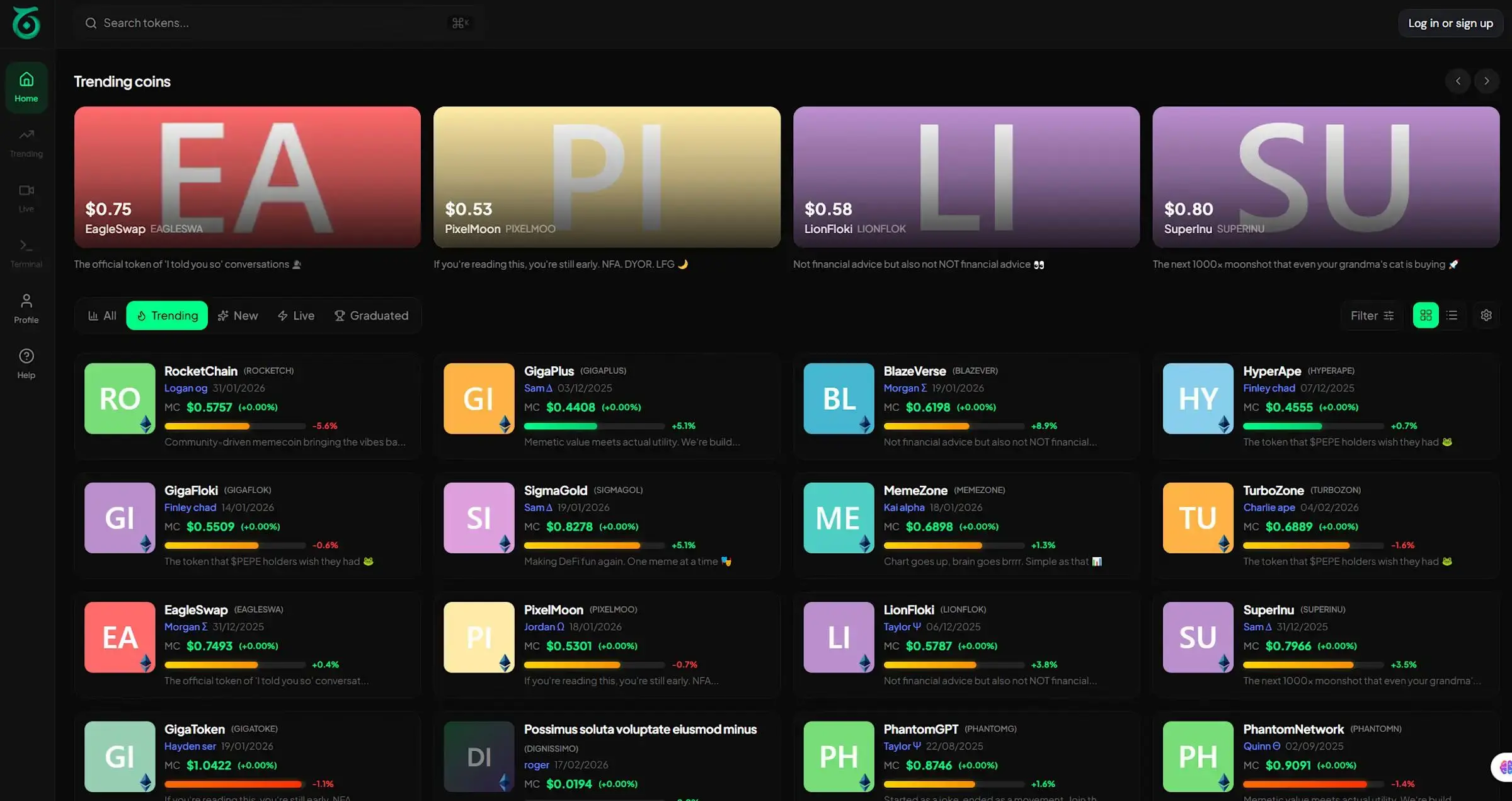
HypeMint is a decentralized DeFi token launch platform engineered with ERC-20 token creation, bonding curve pricing, buy and sell execution, wallet integration, and real-time trading infrastructure.

HypeMint is a decentralized fair-launch platform built for creating, launching, and trading ERC-20 tokens through automated bonding curve pricing.

The platform enables users to connect their wallets, create tokens, execute buy and sell transactions, monitor price movements, and track launched assets through a real-time trading dashboard.

The core engineering challenge extended beyond ERC-20 token deployment. Token creation, bonding curve calculations, trade execution, wallet interactions, contract events, pricing updates, and application state needed to operate as a coordinated DeFi system.

The Challenge

A token launch platform introduces technical and financial complexity across smart contracts, blockchain transactions, pricing mechanisms, and frontend state management.

Incorrect bonding curve calculations can produce inaccurate token prices. Weak transaction handling can result in failed trades or inconsistent application states. Delayed contract event processing can cause the trading interface to display outdated pricing and activity.

HypeMint required an architecture capable of coordinating token deployment, automated pricing, buy and sell transactions, wallet confirmations, and real-time trading data.

The Engineering Approach

The platform was engineered around Solidity smart contracts, Ethereum infrastructure, and a Web3 application layer connecting blockchain operations with the user-facing trading experience.

Token factory contracts manage ERC-20 deployment, while the bonding curve mechanism determines token pricing based on the current supply and trading activity.

Node.js services support token and transaction data, while Next.js powers the token creation and trading interfaces.

Web3.js provides the interaction layer between connected wallets, smart contracts, and the frontend application.

ERC-20 Token Factory

The token factory architecture enables users to create and deploy ERC-20 tokens through the platform.

The deployment workflow coordinates token configuration, smart contract execution, wallet confirmation, and registration of newly launched assets within the application.

Bonding Curve Pricing Mechanism

The core DeFi architecture is built around automated bonding curve pricing.

Instead of assigning a fixed launch price, the mechanism calculates token prices according to the current curve state.

As buying activity changes the token supply, the bonding curve updates the purchase price. Sell transactions calculate asset value against the corresponding curve state.

The mechanism required structured handling of:

  • Token supply
  • Buy pricing
  • Sell pricing
  • ETH and token movement
  • Transaction calculations
  • Slippage-aware execution
  • Smart contract events
  • Pricing updates

Buy & Sell Execution

The trading system connects user wallets directly with the platform's smart contracts.

Users can review token and transaction information, submit buy or sell requests, confirm transactions through their wallets, and monitor execution states through the application interface.

The transaction flow was structured around clear wallet requests, blockchain execution, contract events, and frontend state updates.

Wallet & Web3 Integration

Wallet connectivity provides the foundation for token creation and trading operations.

The Web3 interaction layer manages wallet connections, transaction requests, contract calls, blockchain confirmations, and application state updates.

Real-Time Trading Dashboard

The trading dashboard provides visibility into launched tokens, pricing activity, and transaction data.

Smart contract events and backend services support updates between blockchain activity and the user-facing interface.

The dashboard enables users to monitor token activity and interact with launched assets through a responsive trading experience.

Token Launch Interface

The token creation workflow provides users with an interface for configuring and launching ERC-20 assets.

The application coordinates frontend input, wallet confirmation, token factory execution, and platform state updates throughout the deployment process.

Liquidity Graduation Architecture

The platform architecture included planning for a liquidity graduation workflow, enabling launched tokens to progress toward decentralized exchange liquidity based on defined platform conditions.

This provided the technical foundation for extending the token lifecycle beyond initial bonding curve trading.

Smart Contract Reliability

The platform was structured around predictable smart contract execution and consistent DeFi transaction states.

Engineering priorities included:

  • Bonding curve calculation consistency
  • Controlled token deployment
  • Reliable buy and sell execution
  • Wallet transaction handling
  • Transaction previews
  • Contract event processing
  • Real-time pricing updates
  • Consistent token and trade state tracking

Technology Stack

Solidity, Ethereum, ERC-20, Node.js, Next.js, Web3.js, Smart Contracts, Wallet Integration

Outcome

HypeMint resulted in a functional DeFi token launch platform combining automated ERC-20 deployment, bonding curve pricing, buy and sell execution, wallet connectivity, real-time token activity, and blockchain-backed trading workflows.

The platform provides a technical foundation for fair-launch token ecosystems where asset creation, automated pricing, smart contract execution, and trading activity operate through an integrated Web3 infrastructure.

Share: