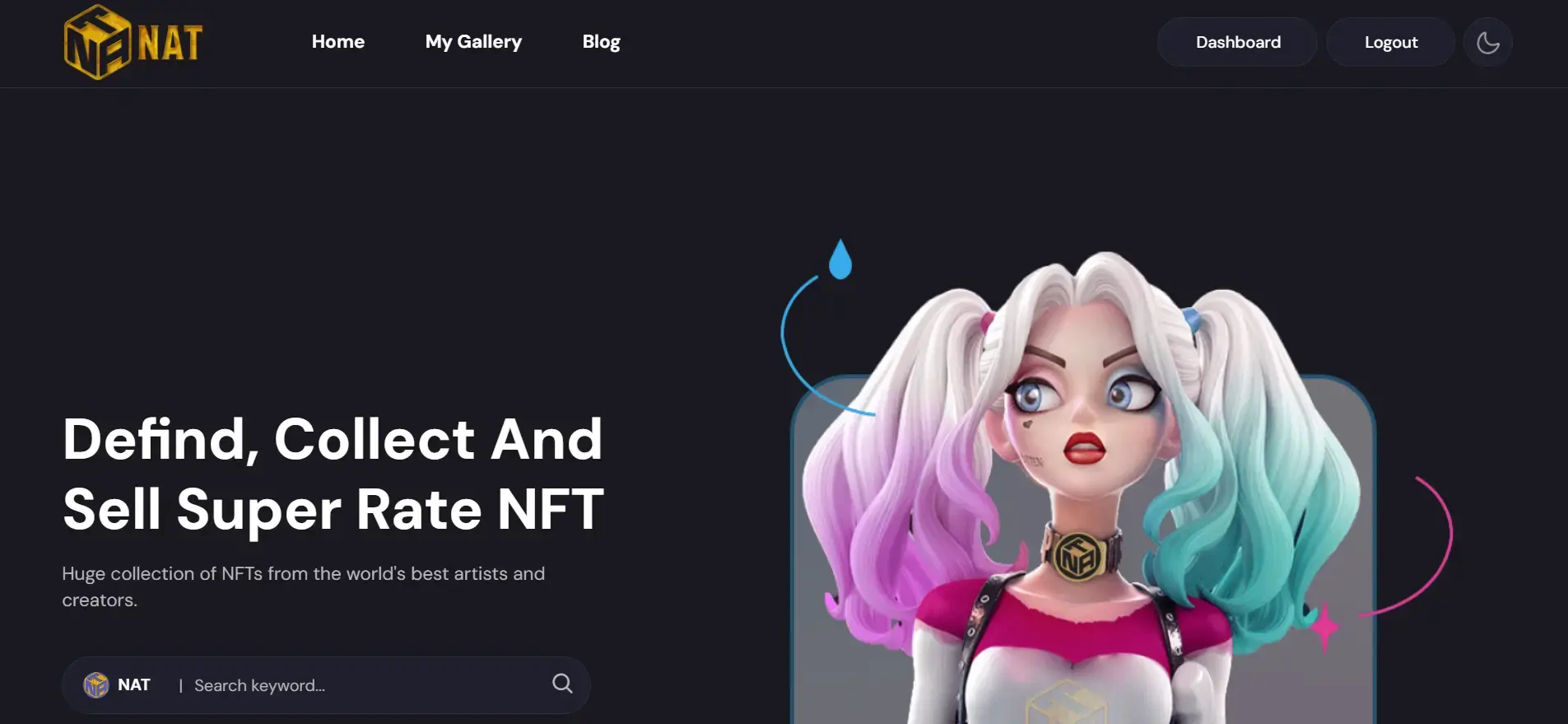
NATHORIZON is a Web3 NFT marketplace engineered with Solidity smart contracts, IPFS metadata storage, wallet authentication, NFT minting and trading, staking support, and scalable backend infrastructure.
NATHORIZON is a production-ready NFT marketplace engineered to support blockchain-based asset creation, ownership, trading, and management through integrated smart contracts, IPFS metadata storage, Web3 wallets, and scalable backend infrastructure.
The platform enables users to mint, list, trade, and manage NFTs while maintaining synchronization between blockchain ownership, marketplace states, IPFS metadata, wallet transactions, and backend records.
The core engineering challenge was marketplace reliability. An NFT platform must coordinate multiple decentralized and centralized systems while keeping ownership, listings, transaction states, and metadata consistent throughout the complete asset lifecycle.
Building an NFT marketplace requires more than deploying smart contracts and displaying digital assets.
Every NFT moves through multiple states involving creation, metadata storage, minting, ownership, listing, purchase transactions, wallet confirmations, and marketplace updates.
If smart contract events, IPFS metadata, backend records, or listing states become inconsistent, users can encounter incorrect ownership information, broken listings, failed transactions, and outdated marketplace data.
NATHORIZON required an architecture capable of coordinating blockchain transactions, decentralized metadata, wallet actions, and backend services as an integrated Web3 marketplace.
The platform was engineered around Solidity smart contracts, Ethereum infrastructure, IPFS metadata storage, Web3 wallet interactions, and scalable backend services.
Smart contracts manage blockchain-based NFT operations and marketplace transactions.
IPFS provides decentralized storage for NFT metadata, while the backend architecture built with Laravel 10, Node.js, and NestJS manages marketplace APIs, application data, and supporting platform operations.
The architecture separates blockchain transactions from backend services while maintaining consistent marketplace and ownership states across the application.
The NFT creation workflow coordinates digital asset information, IPFS metadata storage, wallet interactions, and smart contract execution.
Users can create and mint NFTs through a structured process connecting the marketplace interface with decentralized storage and blockchain infrastructure.
The workflow handles:
NFT metadata is handled through IPFS to provide decentralized storage for asset information.
The metadata architecture connects NFT assets, token information, and blockchain references while enabling the marketplace application to retrieve and display NFT data.
This required structured coordination between IPFS records, smart contract identifiers, backend data, and the user-facing marketplace.
The marketplace supports NFT listing and blockchain-based trading workflows.
The transaction architecture manages:
The platform keeps marketplace records synchronized with blockchain actions throughout the trading lifecycle.
Wallet-based authentication enables users to connect and interact with the marketplace through their Web3 wallets.
Connected wallets provide the foundation for NFT minting, ownership verification, listings, purchases, smart contract interactions, and transaction signing.
The wallet layer was structured to provide consistent user and transaction states across marketplace operations.
NFT ownership is tracked through blockchain transactions and coordinated with marketplace data.
The architecture manages ownership changes resulting from minting, purchases, sales, and other supported NFT operations.
Smart contract interactions and backend services work together to keep ownership information and marketplace records synchronized.
The platform architecture includes support for NFT staking workflows.
This extends the NFT ecosystem beyond marketplace transactions by providing infrastructure for additional blockchain-based asset interactions.
NATHORIZON was structured with multi-token support to provide flexibility across marketplace operations and future platform requirements.
The architecture enables the marketplace infrastructure to support broader token-based functionality without limiting the platform to a single transaction model.
The backend architecture provides APIs and supporting services for marketplace data and platform operations.
Laravel 10, Node.js, and NestJS were used across the backend ecosystem to support:
The marketplace was engineered around structured transaction-state handling.
The application coordinates wallet requests, blockchain transactions, confirmation states, smart contract events, ownership updates, listing changes, and backend records.
This architecture helps maintain consistent marketplace states throughout NFT creation and trading workflows.
Solidity, Ethereum, IPFS, Laravel 10, Node.js, NestJS, Smart Contracts, Web3 Wallets
NATHORIZON resulted in a production-ready NFT marketplace combining Solidity smart contracts, IPFS metadata storage, wallet authentication, NFT minting and trading workflows, ownership tracking, staking support, multi-token functionality, and scalable backend infrastructure.
The platform provides an integrated Web3 architecture for managing NFT assets across blockchain ownership, decentralized metadata, marketplace transactions, wallet interactions, and backend operations.