Office Address


Qubitron Labs

5th Floor, Gordhan Sky Mall,

Office 507, Khatipura Rd, Jhotwara,

Jaipur, Rajasthan 302012, India

📞 +91 80002 43808

✉️ info@qubitronlabs.com

Phone Number

+91 8000243808

Email Address

info@qubitronlabs.com

Travel Rewards & Hotel Booking Platform | GoFlynt India

Project Information

  • Client:GoFlynt India
  • Author: Qubitron Labs
  • Place: Remote

Travel Rewards & Hotel Booking Platform | GoFlynt India

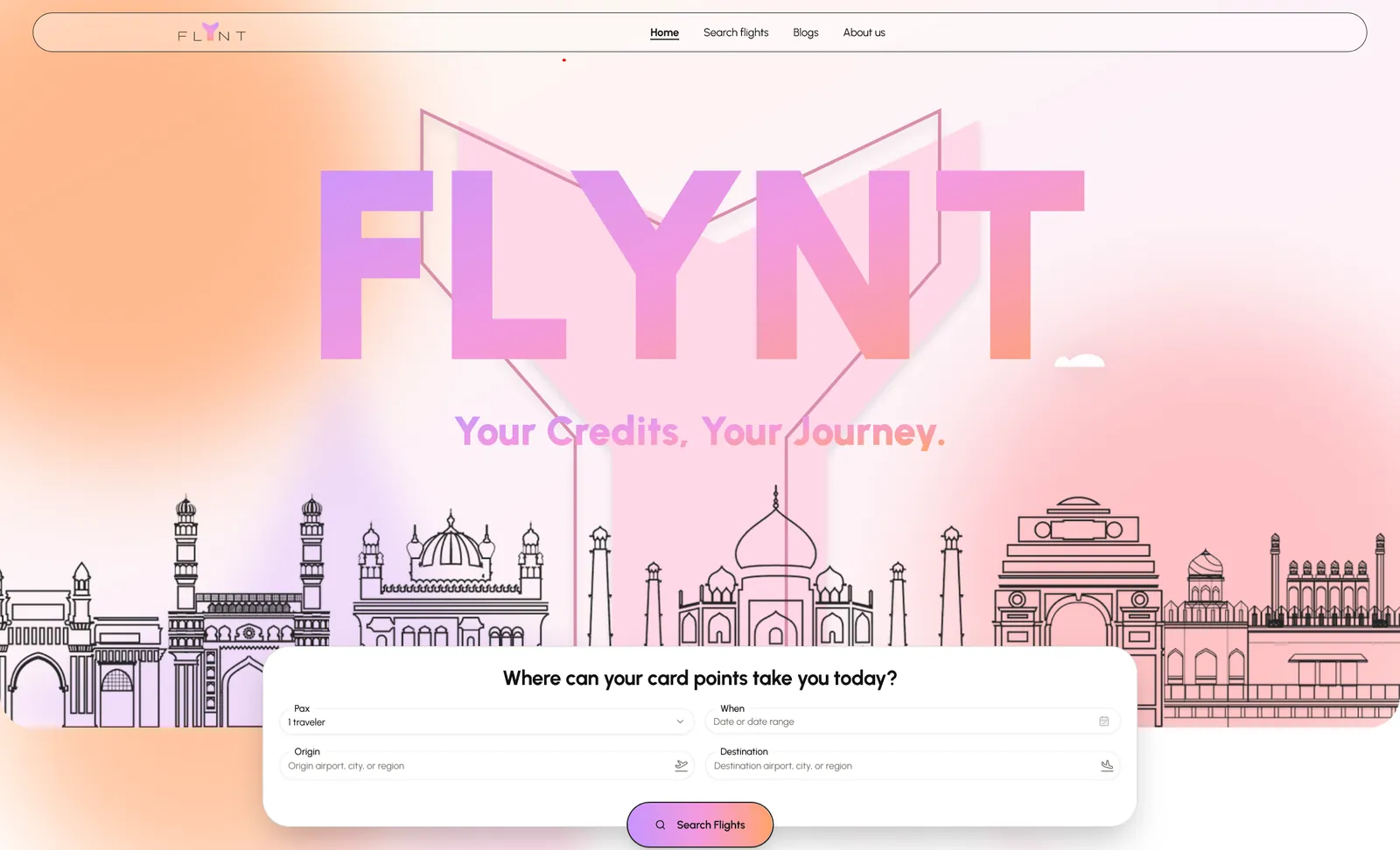
GoFlynt India is a travel rewards and hotel booking platform developed with Next.js, React, and TypeScript, featuring responsive hotel discovery and rewards-focused travel planning experiences.

GoFlynt India is a travel rewards and hotel booking platform developed for the Indian market, combining hotel discovery, booking-focused user journeys, and rewards-based travel planning within a modern web experience.

The project focused on translating detailed product designs into a responsive frontend application that provides clear navigation, structured travel content, and consistent interactions across desktop and mobile devices.

The Challenge

Travel platforms handle large amounts of information across hotels, destinations, booking options, rewards, and user actions.

Presenting this information without overwhelming users requires a clear interface hierarchy and responsive application architecture.

GoFlynt India required a frontend implementation capable of transforming Figma designs into reusable application components while maintaining consistent layouts, interactions, and user journeys across different screen sizes.

The Engineering Approach

The platform frontend was developed using Next.js, React, TypeScript, and Tailwind CSS.

The application architecture focused on reusable components, structured page layouts, responsive behavior, and maintainable frontend code.

Figma designs were translated into functional web interfaces while preserving visual consistency and adapting complex layouts for desktop, tablet, and mobile experiences.

Hotel Discovery Experience

The hotel discovery interface was developed to help users explore travel and accommodation options through structured content and intuitive navigation.

The frontend architecture organizes hotel information and travel content into responsive interfaces designed to remain accessible across different devices.

Booking-Focused User Journeys

The platform was developed around clear travel planning and hotel booking journeys.

Frontend interactions and page structures guide users through hotel discovery and booking-related actions while maintaining consistency throughout the application experience.

Travel Rewards Experience

GoFlynt India incorporates rewards-focused travel planning into the platform experience.

The interface was structured to communicate travel and rewards information clearly while keeping core hotel discovery and booking actions accessible to users.

Figma to Next.js Development

The product designs were implemented from Figma into reusable Next.js and React components.

The development process focused on:

  • Accurate design implementation
  • Reusable component architecture
  • Responsive page layouts
  • Consistent interface patterns
  • Type-safe frontend development
  • Maintainable styling architecture
  • Cross-device usability

Responsive Frontend Architecture

Tailwind CSS was used to build responsive interfaces across the platform.

Layouts and components were adapted for multiple viewport sizes to provide consistent hotel discovery and travel planning experiences across desktop, tablet, and mobile devices.

Component-Based Development

The application was structured around reusable React components to reduce duplicated frontend logic and maintain consistency across the platform.

TypeScript provided type safety across the frontend codebase, while Next.js supported the overall application architecture.

Technology Stack

Next.js, React, TypeScript, Tailwind CSS, Figma

Outcome

GoFlynt India resulted in a responsive travel rewards and hotel booking platform frontend built for the Indian market.

The project transformed product designs into a functional Next.js application with reusable React components, responsive layouts, hotel discovery experiences, booking-focused user journeys, and rewards-based travel planning interfaces.

The resulting frontend provides a maintainable foundation for delivering travel and hotel experiences across desktop and mobile devices.

Share: