
Blockchain Mobile App Development: Complete Guide for Businesses in 2026
Blockchain application development involves creating a mobile application that securely stores and manages data for businesses online. A mobile application can be developed for either iOS or Android platforms.
These apps do not save or share any type of information about their users. The app development companies save data on servers instead of local computers.
Currently, in digital marketing, many businesses use blockchain in their apps to send and receive money safely, store digital items, and make simple agreements without using a third party. Today, blockchain tools can be easily integrated into mobile apps without slowing down the app or making it hard to use.
In this guide, we will discuss how blockchain apps work, where they are used, what problems they may have, and how much they cost. We ensure that this article will help you to understand how to build safe and useful mobile apps.
How Blockchain Works in Mobile Applications?
In mobile apps, blockchain works like a secure digital record system. The mobile app helps users to understand their businesses, and a good mobile structure helps to users click buttons, send data, or make transactions with others.
When a user uses your app and make transaction, the app sends wallet information or API to the blockchain network. After the network is checked it the transaction is correct. If every detail is valid, the data is saved in a shared digital record called a ledger.
To making application fast and safe, you should hire the best blockchain developer company like Quibitron Labs . Do not worry about blockchain apps being safe and secure. It is a safe method to make transactions between multiple crypto networks.
Core Concepts Behind Blockchain Mobile Apps
Decentralized Ledger:- Data is not stored in one place. It is shared across many computers. This makes the system safer and reduces the risk of failure.
Wallets and Keys:- Users have digital wallets with private keys. These keys are protected using passwords, fingerprints, or secure storage.
Transactions:- Important actions, like sending money or data, are recorded on the blockchain. This helps everyone trust the information.
Cryptography and Hashing:- Blockchain uses special math to protect data. If someone tries to change the data, the system will detect it immediately.
Consensus:- Before adding new data, the network members agree on it. This ensures that only correct information is saved.
Common Mobile Blockchain Architectures
Direct Web3 Integration:- The mobile app connects directly to the blockchain network using Web3 tools. This gives more control but needs strong security.
Backend-Connected Model:- The mobile app talks to a backend server, and the server communicates with the blockchain. This makes the app easier to use and faster.
Hybrid Off-Chain Model:- Most business logic runs outside the blockchain. Only important events or proofs are stored on the blockchain for verification.
Components of a Blockchain System in a Mobile Application
A blockchain mobile app is made using different parts that work together to keep data safe, open, and trustworthy.
Main Parts of a Blockchain System
Blocks :- Blocks are like digital boxes that store confirmed information and transactions. Each block is connected to the previous one, which makes the data hard to change.
Nodes :- Nodes are computers or servers that run the blockchain network. They keep copies of all the records and help the system stay honest.
Transactions :- Transactions are actions done by users, such as sending digital money or using a smart contract inside the app.
Consensus Methods
Proof of Work (PoW) :- Proof of Work is a method where computers solve difficult math problems to approve transactions. It is very secure but uses a lot of energy, so it is not ideal for mobile apps.
Proof of Stake (PoS) :- Proof of Stake approves transactions based on how much digital currency a person locks in the network. It is faster and uses less energy, which makes it better for modern blockchain mobile applications.
How a Block Is Created in a Blockchain Mobile App
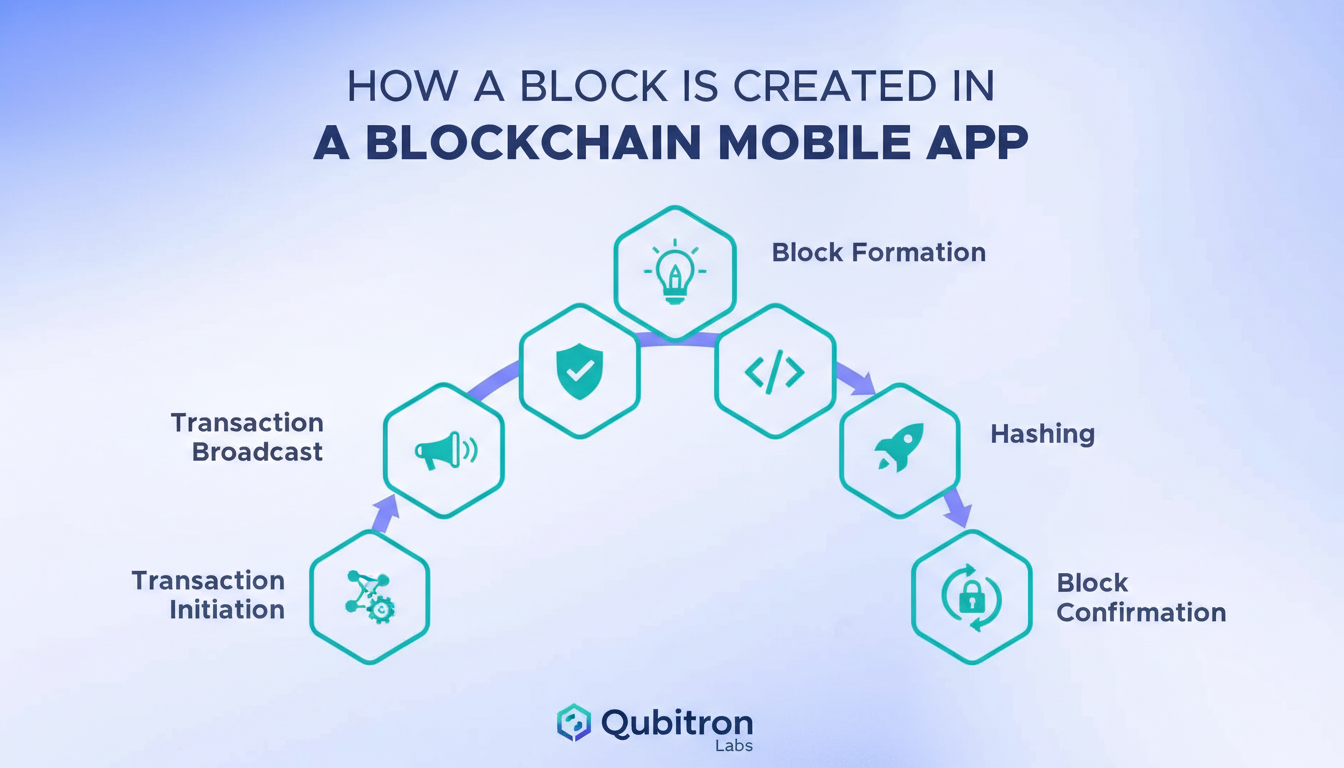
In a blockchain mobile application, every action done by a user is recorded in a safe and trusted way. When a user sends money, signs data, or performs any important task, the app creates a transaction. This transaction is then checked by the blockchain network. The whole process works without any central authority and helps keep the system secure and transparent.
Step-by-Step Process of Block Creation
Transaction Initiation : The process starts when a user performs an action inside the mobile app, such as sending digital money or approving a request. This action creates a new transaction.
Transaction Broadcast : After the transaction is created, it is shared with the entire blockchain network. This allows multiple computers, called nodes, to receive and review the transaction.
Transaction Validation : The nodes check whether the transaction is real and follows all blockchain rules. They verify details like user permission, balance, and data accuracy.
Block Formation : Once the transaction is approved, it is grouped together with other verified transactions. These approved transactions are collected to form a new block.
Hashing and Security Check : The network then applies a security method such as Proof of Work or Proof of Stake. This step creates a unique digital code (hash) that connects the new block to the previous block, keeping the chain secure.
Block Confirmation and Storage : After all checks are complete, the block is added to the blockchain. It becomes a permanent record that cannot be changed or deleted.
Why Should Businesses Use Blockchain in Mobile App Development?
Blockchain is not just a trending technology. It provides real benefits for businesses that build mobile applications, especially when they deal with private data, many users, or trust-related problems. By using blockchain, companies can make their apps more secure, reliable, and efficient.
Strong Security and Data Safety
Blockchain uses special security methods like encryption and digital codes to protect data. Once information is saved on the blockchain, it cannot be easily changed or deleted. This makes it very difficult for hackers to alter records or steal data. As a result, businesses can reduce risks like data theft, fraud, and unauthorized access.
Clear Records and Easy Checking
Every activity on a blockchain is stored on a shared digital record called a ledger. All transactions are recorded clearly and can be checked anytime. This makes tracking and reviewing data much easier. Industries such as banking, supply chain, and regulated businesses benefit a lot because they need accurate and trusted records.
Lower Costs and Better Efficiency
Blockchain helps businesses save money by removing middlemen and automating work using smart contracts. Many tasks that usually need manual approval or third-party services can happen automatically. This reduces errors, saves time, and lowers overall operating costs.
Improved Trust from Users
People trust systems where rules are controlled by technology instead of a single company. Since blockchain is open and difficult to change, users feel more confident using such apps. This trust helps businesses build a strong reputation and maintain long-term relationships with their users.
What Limitations Should You Consider When Developing a Blockchain Mobile App?
Blockchain technology has many advantages, but it also comes with certain limitations. Before starting development, businesses should clearly understand these challenges so they can plan better and avoid problems later.
Performance and Scalability Challenges
Blockchain systems usually work slower than normal databases. This is because every transaction must be checked and approved by the network. When many users use the app at the same time, the network can become crowded. This may cause delays in transaction approval and affect app performance. To solve this, many apps use layer-2 solutions or mixed systems, but this also makes the app more complex.
Storage and Technical Limitations
Storing data directly on the blockchain is costly and limited. Large files and frequently changing data are not suitable for on-chain storage. Because of this, most apps store files outside the blockchain and keep only important references or digital fingerprints on the chain. While this improves speed and lowers cost, it requires careful planning to keep data safe and accurate.
User Experience (UX) Difficulties
Blockchain apps can be confusing for normal users. Things like creating wallets, saving private keys, or approving transactions are not always easy to understand. If the app feels too complicated, users may stop using it. That’s why it is very important to design simple screens and hide technical details from users as much as possible.
Legal and Compliance Issues
Blockchain rules and laws are different in every country. Data privacy laws, financial regulations, and industry standards can affect how a blockchain mobile app works. Businesses must design their apps according to current legal rules to avoid fines or legal trouble in the future.
Costs and Transaction Fees
Blockchain app development can be more expensive than traditional apps. Costs may include transaction fees, server setup, smart contract testing, and regular maintenance. Transaction fees can also change based on network usage, which makes cost planning more difficult.
User Adoption Problems
Many users are still new to blockchain technology. This makes it harder for them to understand how blockchain apps work. Without proper guidance, users may feel confused. Simple onboarding, clear instructions, and easy app design help improve user adoption and long-term usage.
Business Applications of Blockchain in Mobile Apps
Blockchain is no longer limited to digital money. Today, many businesses use blockchain in mobile apps to solve real problems and improve operations.
Use Cases Beyond Cryptocurrency
Supply Chain Management : Blockchain apps help track products from start to finish. They show where products come from and reduce fraud by keeping records open and secure.
Finance and Payments : Blockchain enables fast and safe money transfers between users without depending too much on middlemen. This makes payment apps quicker and cheaper.
Healthcare : Patient data can be stored and shared securely using blockchain. Records cannot be changed, and only approved people can access them.
Gaming : Blockchain allows players to truly own in-game items using NFTs. Players can trade or sell these items outside the game.
Identity Verification : Blockchain-based digital IDs give users control over their personal information and help reduce identity theft and data misuse.
Popular Blockchain Mobile App Examples
Today, many mobile apps use blockchain in smart ways. These apps show how blockchain technology can work smoothly in daily use without confusing users.
MetaMask : MetaMask is a well-known crypto wallet app that helps users store digital tokens and connect with blockchain apps. It hides most of the complex blockchain steps, so users can send transactions safely without needing deep technical knowledge.
Trust Wallet : Trust Wallet is a mobile wallet that allows users to send, receive, and save cryptocurrencies. Its simple design makes it beginner-friendly, helping new users use blockchain technology with ease.
Axie Infinity : Axie Infinity is a blockchain-based mobile game where players own digital items like NFTs. Players can battle, trade, and sell their assets. This app shows how blockchain can support gaming and digital ownership without making things too complex.
DeFi Apps (Aave, Compound, etc.) : These mobile apps allow users to lend, borrow, or earn rewards using crypto, without banks. They highlight the importance of good app design to make advanced financial features easy to understand and use.
How to Develop a Blockchain Mobile App?
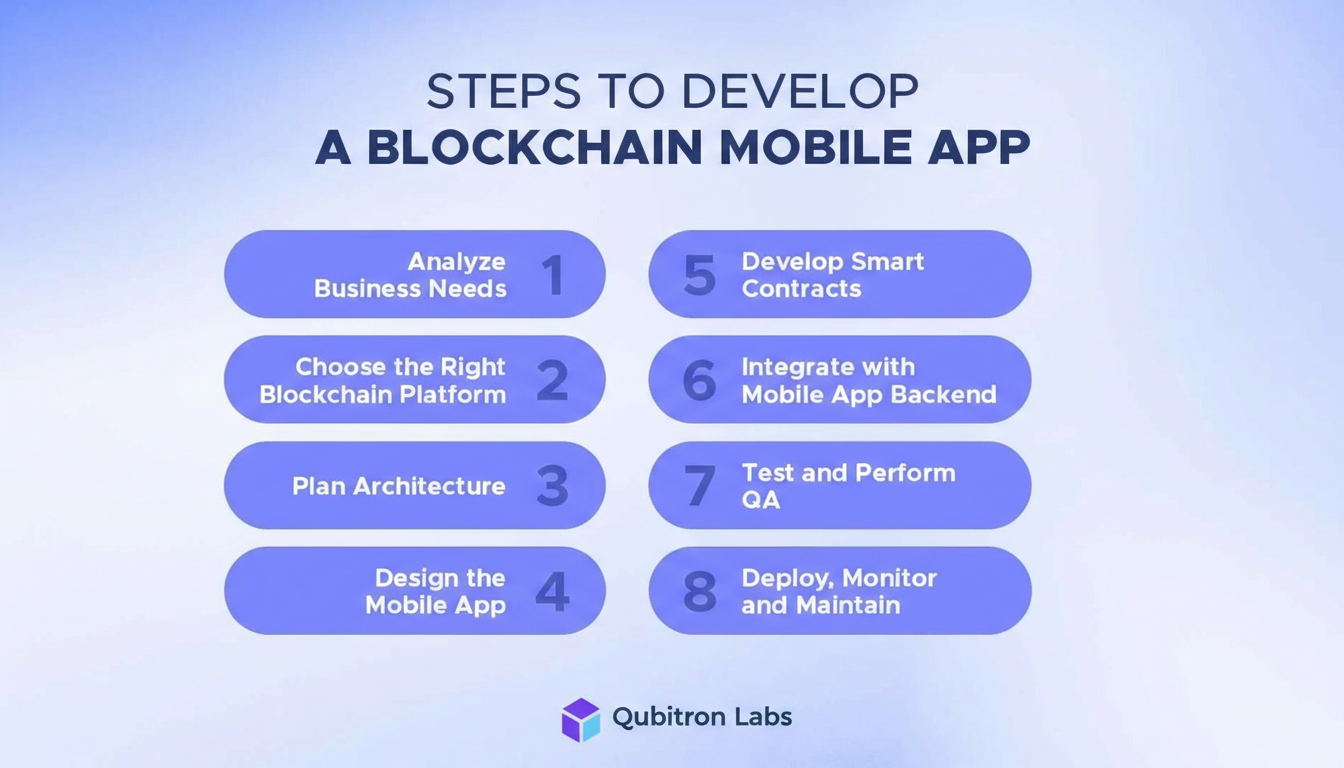
Creating a blockchain mobile app needs proper planning. It should balance business goals, user experience, and the right blockchain technology. Below is a step-by-step guide to building a blockchain mobile app.
Steps to Develop a Blockchain Mobile App
Step 1: Understand Business Requirements
Before starting development, it is important to know why blockchain is needed. Blockchain is useful when trust, transparency, or decentralization is required. Study your current system and check if blockchain truly solves a real problem. Not every mobile app needs blockchain, so this step helps avoid unnecessary complexity.
Step 2: Select the Right Blockchain Platform
Different blockchain platforms serve different purposes. Ethereum is widely used for smart contracts, Solana is known for fast transactions, and Polygon offers lower fees. Hyperledger and Corda are often chosen for business-level solutions. You must also decide whether to use a public blockchain for openness or a private blockchain for better control.
Step 3: Plan the App Architecture
This step focuses on how the mobile app will connect with the blockchain. Decide which data should be stored on the blockchain for security and which data should be stored outside the blockchain for better speed. APIs, middleware, and backend services help connect the mobile app smoothly with the blockchain network.
Step 4: Design the Mobile App Interface
Even though blockchain technology is complex, the app should feel simple to users. Focus on a clean design that makes wallet setup, login, and transactions easy. Creating wireframes and prototypes early helps visualize user flow and avoid confusion later.
Step 5: Build Smart Contracts
Smart contracts control how the blockchain app works. They are written using languages like Solidity or Vyper. Security is very important at this stage because smart contracts are hard to change once deployed. Proper testing is required before launching them on the network.
Step 6: Connect Blockchain with the Backend
After smart contracts are ready, they must be connected to the mobile app using APIs and SDKs. This step also includes setting up databases and backend systems for off-chain data while ensuring everything stays secure and stable.
Step 7: Test and Quality Check the App
Testing goes beyond basic feature checks. Functional testing ensures everything works correctly, while security testing finds weak points in smart contracts. Performance testing also helps keep the app fast and responsive for users.
Step 8: Launch, Monitor, and Maintain
Once the app is launched, regular monitoring is needed. Automated update systems help release new features smoothly. Ongoing maintenance keeps the app secure and ready to handle more users as the business grows.
Tech Stack for Blockchain Mobile App Development
The technology tools you choose play a big role in how strong, safe, and scalable your blockchain mobile app will be. Since blockchain apps combine mobile features with decentralized systems, the tech stack usually includes blockchain tools, mobile development frameworks, and cloud infrastructure working together.
Blockchain Tools and Frameworks
Blockchain platforms like Ethereum, Solana, and Polygon provide ready-made tools such as SDKs, APIs, and smart contract libraries. These tools help mobile apps connect easily with blockchain networks. Web3 libraries are often used to connect wallets and smart contracts, making it easier to add blockchain features without building everything from the beginning.
Mobile App Frontend and Backend
For mobile app development, frameworks like React Native and Flutter are commonly used to build apps that work on both Android and iOS. When native development is needed, developers use Kotlin for Android and Swift for iOS. On the backend side, Node.js is widely used to handle APIs and manage communication between the mobile app and the blockchain. Databases are also used to store off-chain data that does not need to be saved on the blockchain.
Infrastructure and Deployment
Cloud platforms are used to host backend services and support app growth as more users join. Automated systems like CI/CD pipelines help test and update the app smoothly. Container tools make deployments more reliable and allow updates without breaking the app.
Cost Factors in Blockchain Mobile App Development
Creating a blockchain mobile app can be expensive, and costs can vary based on many factors. Understanding these cost drivers early helps businesses plan their budget better and avoid unexpected expenses.
Factors That Affect Development Cost
Blockchain Platform Choice : Different blockchains have different setup requirements. Platforms like Ethereum, Solana, or Hyperledger can affect development time and transaction fees.
Smart Contract Complexity : Simple smart contracts cost less, while advanced contracts need more coding, testing, and security reviews.
Security Requirements : Security audits, encryption, and safety checks increase cost but are very important for protecting data and funds.
Maintenance and Updates : Regular updates, bug fixes, and system improvements are needed to keep the app running smoothly.
Unexpected Issues : Technical bugs, delays, or blockchain network problems can increase development costs if not planned properly.
Estimated Cost Breakdown for Blockchain Mobile Apps
Below is a general cost estimate based on app complexity:
| Blockchain App Type | Estimated Cost | Development Time |
|---|---|---|
| MVP (Basic App) | $15,000 – $30,000 | 6–10 weeks |
| Advanced App | $40,000 – $120,000 | 10–18 weeks |
| Complex / Enterprise App | $120,000 – $300,000+ | 20–32+ weeks |
Future Trends in Blockchain-Integrated Mobile Apps
Blockchain-powered mobile apps are changing very fast. As the technology improves, users expect apps to become easier, faster, and more useful. Below are some important trends that will shape the future of blockchain mobile applications.
Growth of DeFi Apps on Mobile
Decentralized finance, also known as DeFi, is quickly moving to mobile platforms. These apps allow users to trade, lend, borrow, and manage digital assets directly from their phones. With better app design and faster blockchain networks, DeFi apps are becoming simpler and more practical for everyday use.
Combining AI with Blockchain
The use of artificial intelligence together with blockchain is increasing in mobile apps. AI helps analyze data, detect fraud, and automate tasks, while blockchain keeps data safe and transparent. When used together, they create smarter, safer, and more reliable mobile applications.
Decentralized Identity and Smart Wallets
Blockchain wallets are no longer used only for storing crypto. Modern wallets now support digital identity, secure login, and digital documents. This gives users more control over their personal information across different mobile apps and platforms.
Advanced DApps for Android and iOS
The next generation of decentralized apps is focusing on better speed, lower costs, and smoother user experience. With faster onboarding, cheaper transactions, and strong cross-platform support, blockchain mobile apps are starting to feel more like regular mobile apps.
Conclusion
Blockchain mobile app development is no longer just a new idea. It has become a smart investment for businesses that want better security, clear records, and innovation. By understanding how blockchain works, selecting the right platform, and designing easy-to-use apps, businesses can create strong and reliable mobile solutions.
Whether a company is a startup exploring new ideas or a large business improving existing systems, now is a great time to consider blockchain mobile app development. With proper planning and guidance from experienced experts, businesses can build apps that are ready for the future.
Frequently Asked Questions (FAQs)
1. Do blockchain mobile apps work without an internet connection?
No. Blockchain mobile apps need an internet connection to send and confirm transactions on the network. Some apps may allow limited offline features, but full blockchain actions require internet access.
2. Can blockchain mobile apps be used by people without crypto knowledge?
Yes. Many modern blockchain apps are designed to be beginner-friendly. They hide complex blockchain steps and guide users with simple screens and instructions.
3. Is blockchain mobile app development suitable for small businesses?
Yes. Small businesses can start with simple blockchain features or an MVP to test ideas before investing in a full-scale app.
4. How long does it take to learn blockchain mobile app development?
Learning basic blockchain and mobile development can take a few months. However, building advanced apps with smart contracts and security features requires more time and practice.
5. Can blockchain mobile apps be updated after launch?
Yes. The mobile app itself can be updated regularly. However, smart contracts on the blockchain are hard to change, so they must be carefully tested before launch.
6. Do blockchain mobile apps consume more battery?
Some blockchain features can use extra resources, but most modern apps are optimized to minimize battery usage and work smoothly on smartphones.
7. Can blockchain mobile apps work with traditional systems?
Yes. Many blockchain apps use hybrid systems where blockchain works together with traditional databases and servers for better performance.
8. Is blockchain mobile app development future-proof?
Blockchain technology is still growing, but it is widely adopted across industries. With proper planning and scalable design, blockchain mobile apps can remain useful for many years.