Web Development vs App Development – Which Is Best for You?
Today, every business wants to be online. Some choose a website, while others choose a mobile app. This is where the big question comes in web development vs app development. Both help businesses grow, connect with users, and build trust, but they work in different ways.
Web development is about creating websites that open in a browser like Chrome or Safari. App development is about building mobile apps that people download from the Play Store or App Store. Each option has its own power, cost, and purpose. Choosing the right one can save money, time, and effort.
In this article, we will simply explain the difference between web development and app development, so you can easily understand which one is best for you. Don’t worry no technical words, just clear and friendly explanations.
What is Web Development?
Web development means creating a website that opens on the internet using a browser like Chrome, Firefox, or Safari. When you search on Google and open a website, you are using a web-developed product. Websites work on mobile phones, laptops, tablets, and desktops without downloading anything.
Web development focuses on making websites fast, easy to use, and helpful. It includes things like design, content, buttons, and forms. A good website helps people learn about a business, trust it, and take action like calling, filling a form, or buying a product.
Web development is very popular because it is easy to access, cost-friendly, and SEO-friendly. Search engines like Google can easily find websites, which helps businesses get more visitors. That’s why web development is a smart choice for businesses that want online visibility and growth.
What is App Development?
App development means creating a mobile application that people download and install on their smartphones. These apps are made for platforms like Android and iOS and are available on the Play Store or App Store. When you use apps like food delivery, shopping, or social media, you are using app-developed products.
Mobile apps are designed to give a smooth and personal experience. They work faster than websites and can use phone features like the camera, GPS, and notifications. This makes users feel more connected and engaged with the app.
App development is best for businesses that want strong user engagement, repeat users, and better performance. Although app development can cost more, it creates a powerful bond between the user and the brand, which helps build loyalty and trust over time.
Difference Between Web Development and App Development
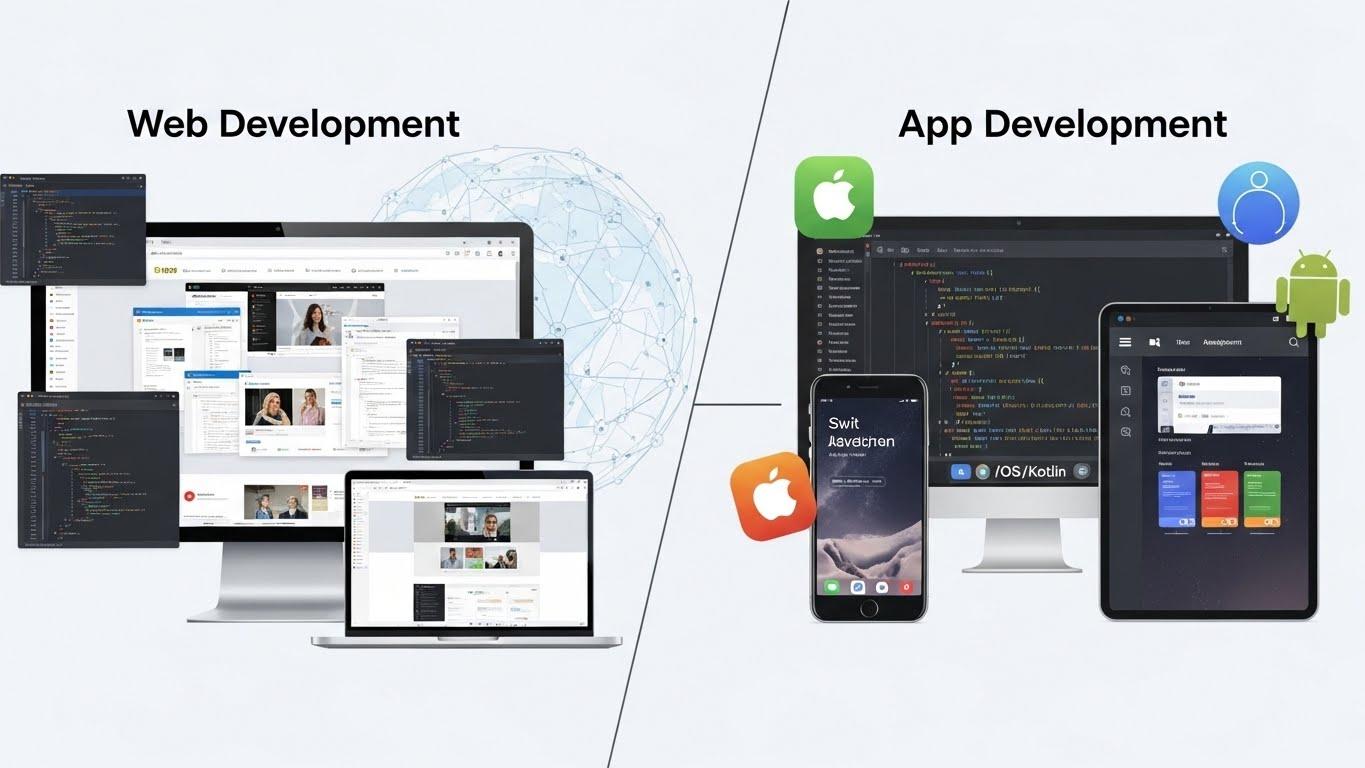
| Feature | Web Development | App Development |
|---|---|---|
| Platform | Works on web browsers like Chrome and Safari | Works on mobile devices like Android and iOS |
| Installation | No download needed, opens directly in browser | Needs to be downloaded from App Store or Play Store |
| Cost | Lower development and maintenance cost | Higher cost due to platform-specific development |
| Speed | Depends on internet and browser performance | Faster and smoother performance |
| User Experience | Simple and easy for first-time users | More engaging and personalized experience |
| Offline Use | Limited offline access | Can work offline in many cases |
| SEO Visibility | Easy to rank on Google search | Not visible on Google search directly |
| Updates | Updates are instant for all users | Users must update the app manually |
| Device Features | Limited access to phone features | Full access to camera, GPS, notifications |
Which Is Best for You?
Choosing between web development and app development depends on your goal, budget, and audience. If you want more people to find you on Google and learn about your business easily, web development is the best choice. A website is simple, affordable, and perfect for building trust online.
If your business needs users to visit again and again, like shopping, booking, or daily use services, then app development is a better option. Mobile apps give a faster, smoother, and more personal experience that makes users feel connected.
Many smart businesses start with a website and later build an app when they grow. There is no wrong choice; the best option is the one that supports your dream and helps your users feel happy and comfortable.
FAQ's
1. Can a website work without an internet connection? Most websites need the internet to work properly, but some modern websites can save small data and open limited pages even when the internet is slow or unavailable.
2. Do mobile apps use more phone storage than websites? Yes, mobile apps use phone storage because they are downloaded and installed, while websites do not take storage space on the device.
3. Is it possible to turn a website into a mobile app later? Yes, many businesses first build a website and later convert it into a mobile app when their user base grows.
4. Which option is easier to maintain in the long run? Websites are easier to maintain because updates are done once and visible to all users instantly.
5. Do users trust websites more or mobile apps? Users usually trust websites for information and mobile apps for regular use, depending on how helpful and secure the platform feels.