Blockchain in Supply Chain Management: Benefits, Use Cases & Future
Blockchain in Supply Chain Management: Benefits, Use Cases & Future
Blockchain in Supply Chain Management improves transparency, reduces fraud, and enables real-time tracking across global logistics networks. Companies adopting blockchain gain better data accuracy, automated processes through smart contracts, and stronger trust between suppliers, manufacturers, and distributors.
Introduction
Supply chains have become increasingly complex. A single product often travels through multiple suppliers, manufacturers, warehouses, and logistics providers before reaching the customer. Traditional systems struggle with d ata silos, lack of transparency, and delayed verification .
This is where Blockchain in Supply Chain Management is making a significant impact. Blockchain technology creates a decentralized, tamper-proof record of transactions that all participants in the supply chain can trust. Instead of relying on separate databases, companies can access a shared ledger that records every step of the product journey.
Organizations are now working with a blockchain development company to integrate distributed ledger technology into logistics operations and improve efficiency.
What is Blockchain in Supply Chain Management?
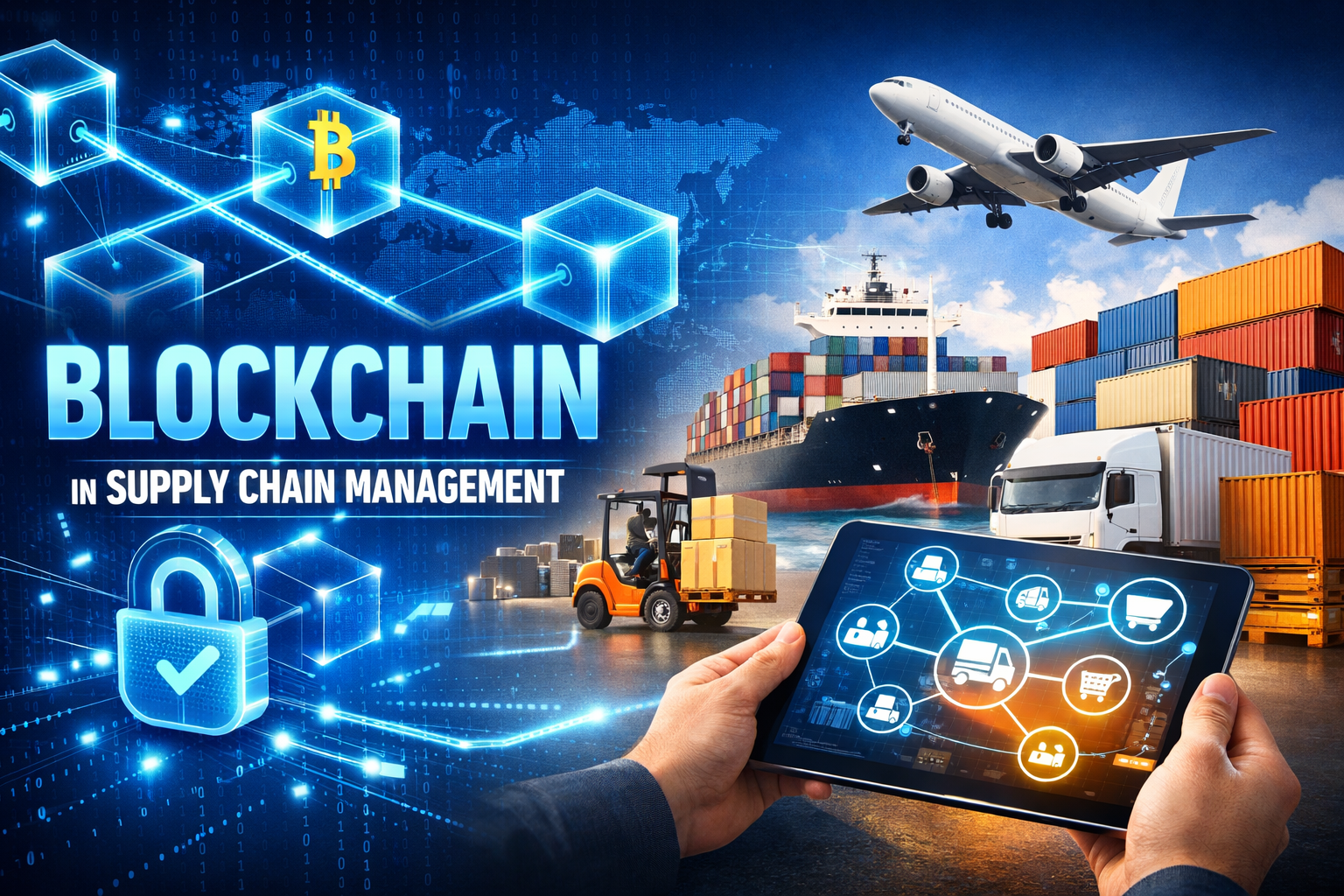
Blockchain in supply chain refers to the use of distributed ledger technology (DLT) to record and track goods, transactions, and data across the entire supply chain network.
Each transaction is stored in a block and linked to previous blocks, forming a secure and transparent chain of records.
Key characteristics include:
- Decentralized data sharing
- Immutable transaction records
- Smart contract automation
- Real-time product tracking
- Increased transparency between partners
Instead of verifying documents manually, stakeholders can instantly confirm shipment status, authenticity, and ownership history.
Major Benefits of Blockchain in Supply Chain Management
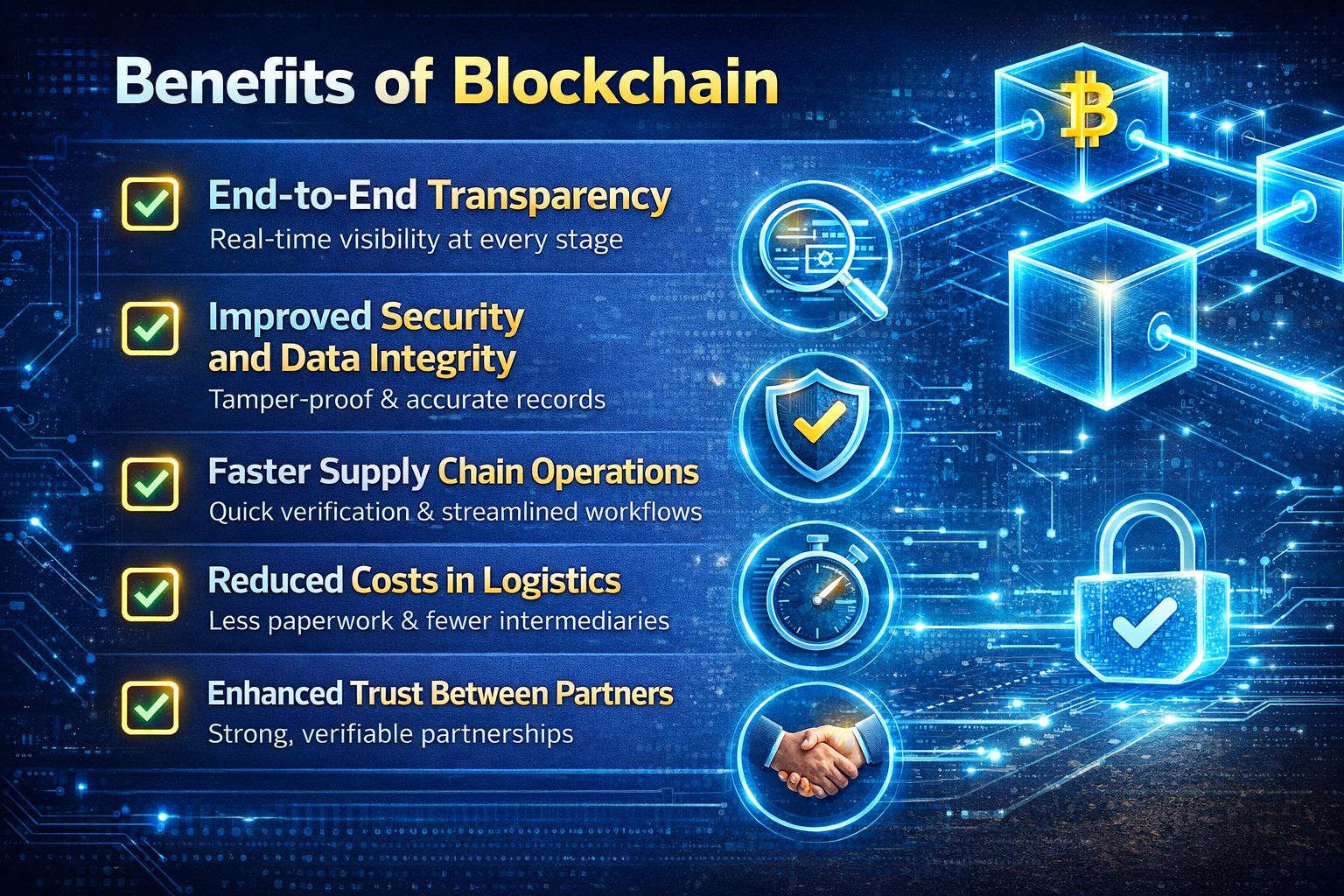
1. End-to-End Transparency
One of the biggest challenges in supply chains is visibility. Companies often struggle to track where a product is at a specific time.
Blockchain solves this by providing real-time tracking and transparent data sharing across all participants.
Benefits include:
- Clear product origin tracking
- Accurate shipment records
- Reduced disputes between partners
- Improved compliance with regulations
For industries like food, pharmaceuticals, and luxury goods, transparency is critical.
2. Improved Security and Data Integrity
Traditional databases can be altered or manipulated. Blockchain records are immutable , meaning once data is recorded, it cannot be changed.
This helps prevent:
- Fraudulent transactions
- Counterfeit products
- Unauthorized data modifications
Because each block is cryptographically secured, the system ensures reliable supply chain records.
3. Faster Supply Chain Operations
Manual verification processes slow down logistics. Blockchain automates many of these processes using smart contracts .
Smart contracts automatically execute actions such as:
- Payment is released after delivery confirmation
- Inventory updates
- Compliance verification
This reduces administrative workload and accelerates supply chain operations.
4. Reduced Costs in Logistics
Blockchain eliminates intermediaries and reduces paperwork, which lowers operational costs.
Cost savings typically come from:
- Reduced transaction fees
- Fewer reconciliation errors
- Lower fraud-related losses
- Faster payment settlements
Businesses adopting blockchain often see improved efficiency across procurement, inventory, and distribution.
5. Enhanced Trust Between Partners
In global supply chains, many organizations do not fully trust each other's data systems. Blockchain solves this problem with shared verification .
Every participant sees the same transaction history, which builds trust between:
- Suppliers
- Manufacturers
- Logistics providers
- Retailers
This shared trust is one reason why companies seek a reliable blockchain development company to implement customized solutions.
Real-World Use Cases of Blockchain in Supply Chains
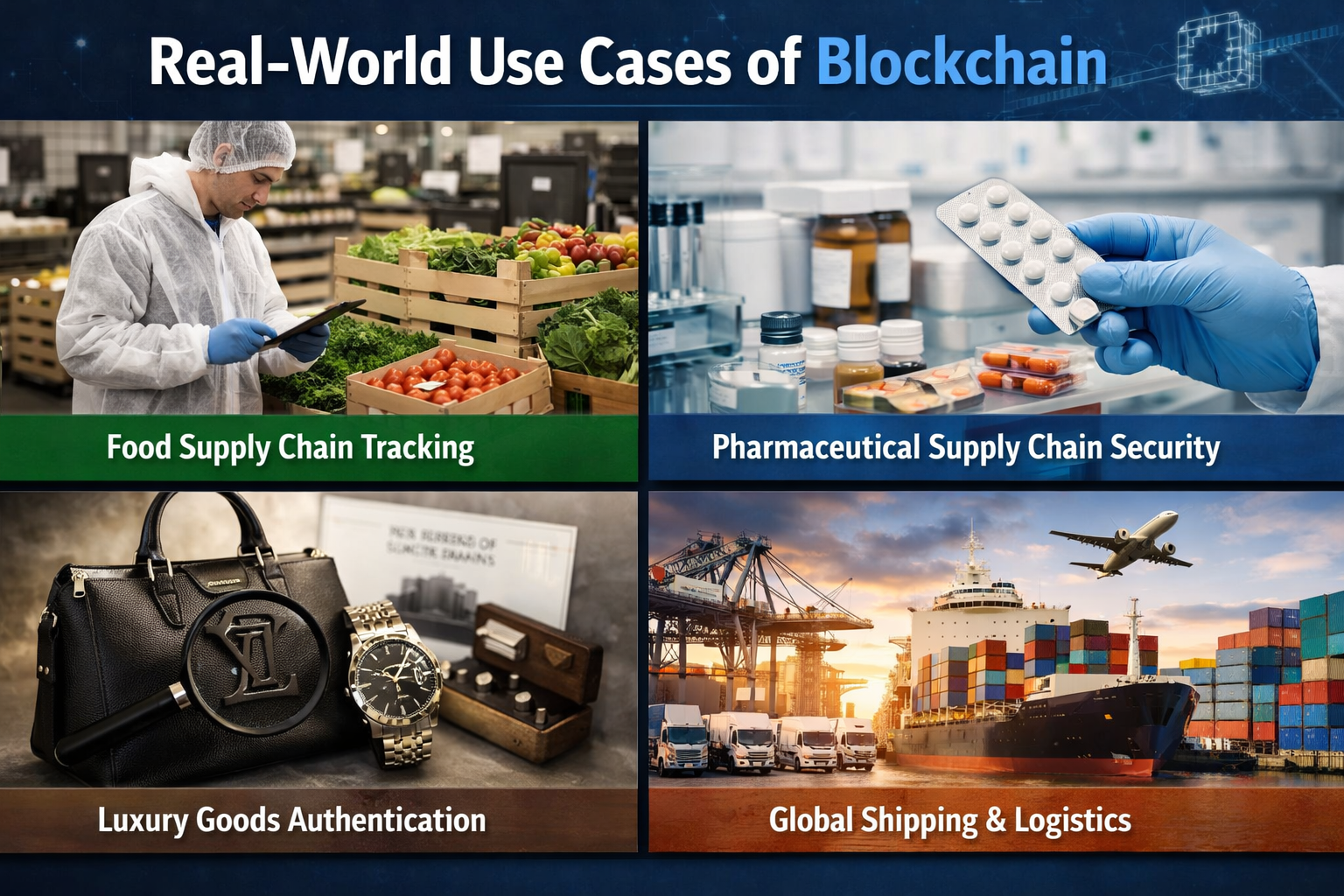
1. Food Supply Chain Tracking
Food safety is a major concern globally. Blockchain enables tracking food products from farm to table.
Example improvements include:
- Identifying contamination sources quickly
- Monitoring storage conditions
- Ensuring product authenticity
Major retailers already use blockchain to improve traceability.
2. Pharmaceutical Supply Chain Security
The pharmaceutical industry faces serious issues with counterfeit medicines.
Blockchain helps by:
- Tracking drug manufacturing data
- Verifying authenticity
- Ensuring regulatory compliance
Patients and healthcare providers benefit from safer drug distribution.
3. Luxury Goods Authentication
Luxury brands suffer from counterfeit products entering the market.
Blockchain allows brands to:
- Assign digital identities to products
- Verify ownership history
- Prevent the circulation of fake goods
Consumers can verify authenticity before purchasing.
4. Global Shipping and Logistics
Shipping companies deal with large volumes of documentation and international regulations.
Blockchain helps streamline:
- Customs documentation
- Shipment tracking
- Payment processing
- Cargo verification
This reduces delays and improves logistics efficiency.
Challenges of Implementing Blockchain in Supply Chain
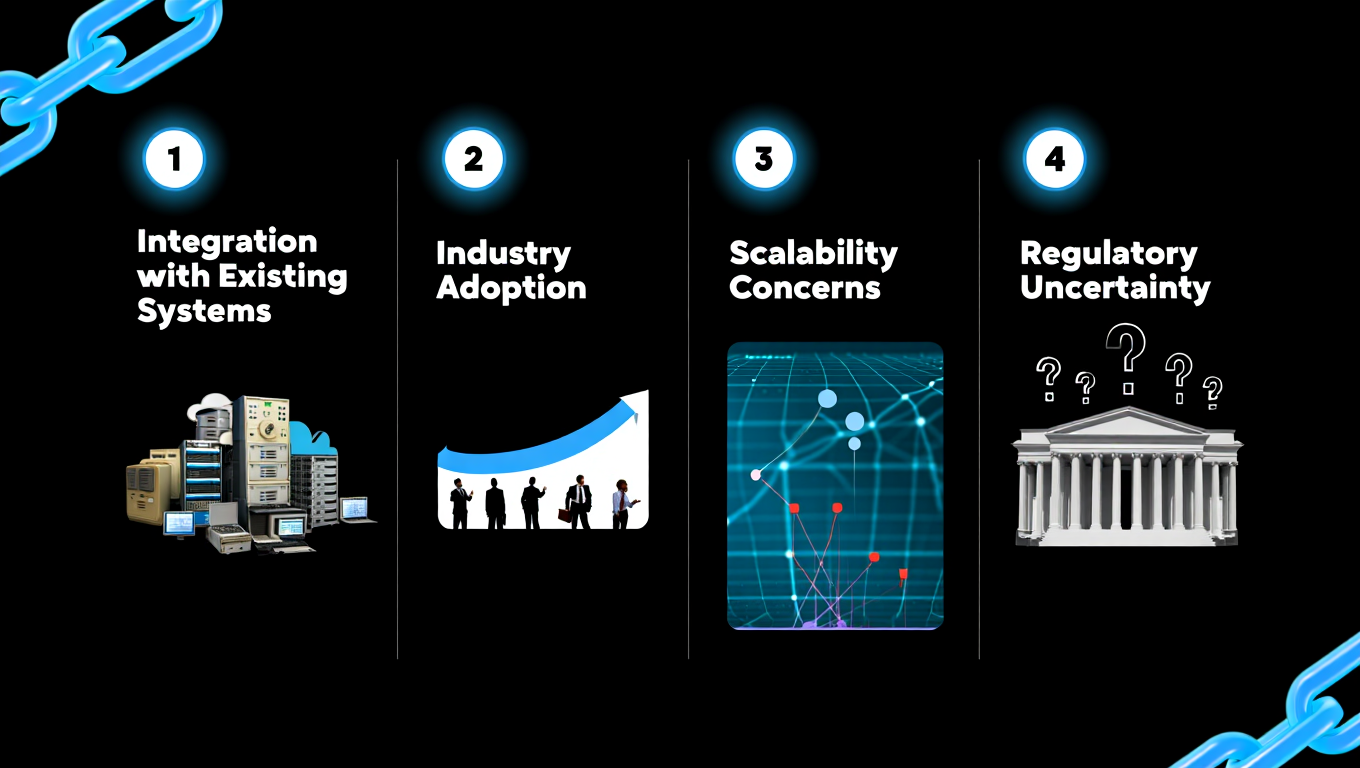
While the benefits are strong, implementation does come with challenges.
1. Integration with Existing Systems
Many companies still rely on legacy software. Integrating blockchain requires technical planning and infrastructure upgrades.
2. Industry Adoption
Blockchain works best when multiple partners join the network. Adoption across the entire ecosystem takes time.
3. Scalability Concerns
Large supply chains generate massive data. Systems must be designed to handle high transaction volumes efficiently.
4. Regulatory Uncertainty
Different countries have different regulations regarding blockchain and data sharing.
Despite these challenges, the adoption rate continues to grow globally.
Future of Blockchain in Supply Chain Management
The future of Blockchain in Supply Chain Management looks promising as technology evolves and adoption increases.
Key trends expected in the coming years include:
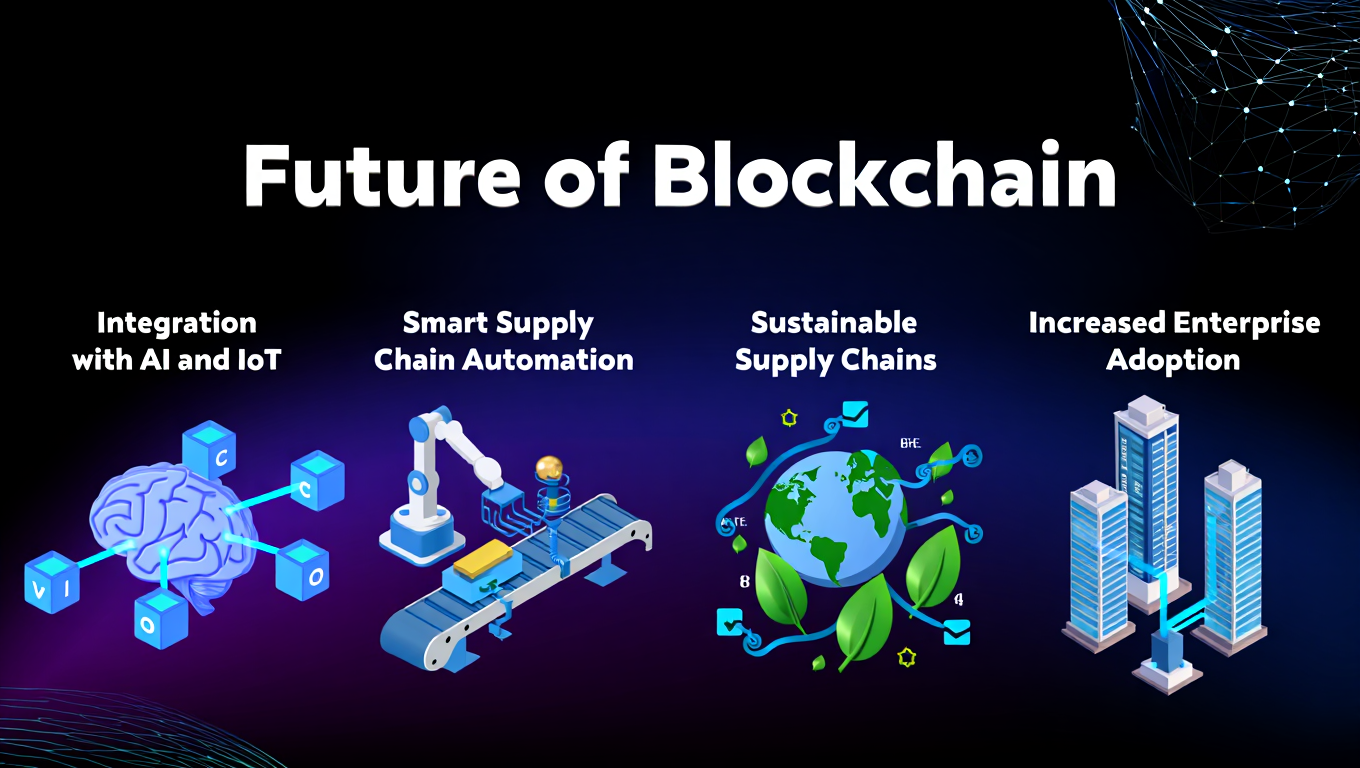
1. Integration with AI and IoT
Blockchain combined with IoT sensors will enable:
- Real-time shipment monitoring
- Temperature tracking for goods
- Automated supply chain decisions
AI can analyze blockchain data to improve forecasting and logistics planning.
2. Smart Supply Chain Automation
Smart contracts will handle many operational processes automatically, reducing human intervention.
This includes:
- Automated payments
- Inventory restocking
- Supplier verification
3. Sustainable Supply Chains
Consumers are demanding ethical sourcing and sustainability.
Blockchain will help companies:
- Track carbon emissions
- Verify ethical sourcing
- Improve environmental reporting
4. Increased Enterprise Adoption
Large enterprises and governments are investing in blockchain networks for logistics optimization.
Companies looking to implement these systems often collaborate with firms like qubitron labs that specialize in advanced blockchain solutions for enterprises.
As industries move toward digital transformation, blockchain will become a core technology in logistics infrastructure. Businesses that adopt it early gain a competitive advantage in efficiency, trust, and transparency.
Another reason organizations work with innovators like Qubitron Labs is to build scalable blockchain platforms tailored for global supply chains.
Conclusion
Blockchain technology is changing supply chain management, enhancing efficiency, transparency, and security the efficiency of operation.
Businesses can monitor their products with greater accuracy, cut down on fraudulent activity, improve processes, and establish stronger relationships across international networks.
Though implementation does require preparation and collaboration between the industry, the benefits over time make Blockchain among the key technological advancements that are shaping the future of logistics.
Companies that are considering digital transformation must consider implementing blockchain-based solutions to remain competitive in an ever-changing supply chain.
FAQ
What is blockchain in supply chain management?
Blockchain in supply chain management is the use of distributed ledger technology to record and track goods, transactions, and data across the entire supply chain network.
How does blockchain improve supply chains?
Blockchain improves supply chains by increasing transparency, reducing fraud, automating processes with smart contracts, and enabling real-time product tracking.
Which industries benefit most from blockchain supply chains?
Industries such as logistics, food supply, pharmaceuticals, retail, and luxury goods benefit the most from blockchain implementation.
Is blockchain the future of logistics?
Yes, blockchain is expected to play a major role in future logistics systems due to its ability to provide secure, transparent, and efficient supply chain operations.